Let me say something a lot of my Turkish colleagues would rather you didn’t hear: a meaningful slice of the "Turkey teeth" industry deserves every bit of the negative headlines it gets.
The BBC investigations, formal warnings from the UK’s General Dental Council (GDC), and position papers from the British Dental Association (BDA) are not xenophobic propaganda. At MIAS Dental Clinic in Antalya, our schedules regularly accommodate "rescue cases" from the UK, Ireland, Germany, and the Netherlands. These are patients who returned home from a 4-day, all-inclusive "smile vacation" only to experience excruciating nerve pain, chronic gum infections, debilitating TMJ bite collapse, or rows of healthy teeth filed down to razor-sharp stumps they can no longer live with.
I am a licensed Turkish oral surgeon and clinic director in Antalya. I could pretend the problem is merely "a few bad apples." But that would be dishonest—and dishonesty is precisely what created this crisis. A specific, aggressive, volume-driven sub-segment of Turkish dental tourism operates on an assembly-line model that makes biological failure almost predictable.
However, that predatory niche does not represent Turkey’s 35,000 licensed, highly skilled dental practitioners, university teaching hospitals, or ethical clinics. This guide is written from the inside out to explain why dental treatments go wrong, how we perform precision revision dentistry at MIAS Dental Clinic, and exactly how prospective patients can protect themselves before booking.
Key Takeaways: 2026 Turkey Dental Safety
- ✓ The issue is the business model, not the country: Turkey boasts world-class dental faculties and technology. The danger lies in commission-based sales brokers and budget "factories" shaving 20 teeth in 72 hours.
- ✓ The math of budget packages does not add up: If an agency quotes €2,800 for hotel, VIP transfers, and 20 "zirconia crowns," genuine certified zirconia blocks, sterile autoclave cycles, 3D CBCT diagnostics, and master ceramist fees are mathematically impossible.
- ✓ Cheap work costs 2.5x to 3.5x more: Fixing over-prepped, necrotic teeth or failed non-cleansable bridges costs significantly more than receiving ethical, minimally invasive care from day one.
- ✓ Enforceable warranties require legal accountability: Verbal "lifetime guarantees" are worthless without a Ministry of Health clinic license number, named clinician signature, and official material passport cards.
1. Why Do Treatments Fail? The 10 Most Common Clinical Errors
Based on hundreds of rescue consultations at MIAS Dental Clinic, treatment failures almost always originate from specific violations of biological principles:
1. Aggressive Over-Preparation (The "Shark Teeth" Horror)
Patients are sold "veneers" but instead receive 360-degree full crown preparations with 2.0 to 3.0 mm of natural enamel and dentin ground away. Frictional heat and severe structural loss induce pulpal inflammation. Scientific studies show that 20% to 40% of aggressively prepped teeth develop pulp necrosis and require root canal therapy within 24 to 36 months.
2. Violation of Biological Width (Chronic Gingivitis & Bone Resorption)
When crown margins are shoved deep beneath the gum line to hide margins, the body's natural soft-tissue attachment (biological width) is destroyed. The immune system reacts with permanent inflammation, bleeding on brushing, purple gum collars, bone loss, and foul odor.
3. Occlusal Disharmony & Bite Collapse (TMJ Trauma)
Crowning 20 or 28 teeth without registering centric relation forces the jaw into an unnatural position. Premature contacts cause severe muscle spasms, waking tension headaches, broken ceramics, and permanent damage to the temporomandibular joint (TMJ).
4. Blind 2D Implant Placement (No 3D CBCT)
Relying solely on 2D panoramic X-rays leaves the surgeon blind to bone thickness and nerve trajectories. Implants penetrating the maxillary sinus or severing the inferior alveolar nerve cause permanent numbness in the lower lip and chin.
5. 4-Day Rush Protocols
Bone remodeling and soft-tissue maturation require biological time. Forcing full-arch extractions, impressions, and final ceramic delivery into a 4-day window inevitably leads to major gum shrinkage within months, leaving large food-trapping gaps under the crowns.
6. Opaque Monolithic Zirconia on Anterior Teeth ("Toilet-Bowl White")
Budget clinics use inexpensive, dense industrial white zirconia for all teeth. Without hand-layered porcelain translucency or individual morphology, patients end up with opaque, blindingly white "piano keys" that look completely unnatural.
7. Non-Cleansable Full-Arch Bridges & Peri-Implantitis
Cementing All-on-4 or All-on-6 bridges without hygiene access tunnels prevents patients and hygienists from removing plaque beneath the prosthesis. The resulting bacterial biofilm destroys surrounding bone (peri-implantitis), causing total implant failure.
8. Absence of Occlusal Night Guards
More than 60% of patients seeking cosmetic makeovers suffer from unconscious nocturnal teeth grinding (bruxism). Discharging a patient with 28 ceramic units without a custom hard occlusal splint guarantees ceramic chipping within 18 months.
9. Treatment Dictated by Sales Reps, Not Clinicians
Non-clinical telemarketers on commission sell pre-packaged full-mouth bundles. The dentist who actually touches the patient is under contractual obligation to deliver what the salesperson sold, regardless of biological suitability.
10. Paper-Tiger Warranties
"Lifetime warranties" that require the patient to self-fund flights, hotels, and laboratory fees, or that become void if you visit any foreign dentist. In practice, they are legally unenforceable once you leave Turkey.
2. Clinical Symptoms, Root Causes & MIAS Revision Protocol
The following diagnostic table details how we identify and systematically resolve failed cosmetic and implant dentistry at MIAS Dental Clinic:
| Patient Symptom | Underlying Clinical Cause | MIAS Rescue Protocol & Solution |
|---|---|---|
| Hot/cold sensitivity, spontaneous night throbbing | Pulp necrosis / irreversible pulpitis from excessive tooth reduction. | 3D CBCT diagnostic imaging, atraumatic bridge removal, microscopic endodontic retreatment, post-core foundation, and biologically sealed temporary restorations. |
| Bleeding gums, purple discoloration, foul odor | Biological width violation, overhang margins, or subgingival cement entrapment. | Minimally invasive diode laser gingivectomy, margin repositioning to equigingival levels, custom CAD/CAM emergence profile temporary phase to allow complete tissue recovery. |
| Inability to chew, jaw muscle fatigue, morning headaches | Loss of vertical dimension, lack of anterior guidance, occlusal prematurities. | T-Scan digital bite calibration, deprogramming occlusal splint therapy for 4-8 weeks, followed by anatomically balanced porcelain crowns with canine guidance. |
| Bleeding or pus around implants, loose prosthesis | Active peri-implantitis due to non-cleansable cemented design or bone loss. | Surgical flap debridement, implant surface decontamination, bone augmentation, and conversion to a hygienic screw-retained CAD/CAM titanium-zirconia bridge. |
| Opaque, bulky, unnatural "Chiclet" smile | Monolithic low-translucency zirconia blocks, lack of digital facial design. | Digital Smile Design (DSD), face-bow analysis, layered IPS e.max lithium disilicate or multi-layered Katana zirconia crafted by master ceramists. |
3. The Economics of Dental Rescue: "Cheap Work Costs Double"
Discount dental factories never reveal this commercial reality: fixing botched dentistry is far more technically demanding and expensive than doing it right the first time. Natural tooth structure cannot be regenerated once ground away, and inflamed bone requires surgical regeneration.
| Clinical Presentation | Budget Turkey Invoice | Ethical Clinic Rescue Cost | Total Paid by Patient | Cost Multiple |
|---|---|---|---|---|
| 20 crowns over-prepped, 4 requiring root canal treatment | €2,800 | €7,500 (RCTs + 2 implants + 16 E-max crowns) | €10,300 | 3.6x |
| All-on-4 with active peri-implantitis & broken bridge | €4,200 | €6,000 (Surgery + bone graft + screw bridge) | €10,200 | 2.4x |
| 28 crowns with occlusal bite collapse & TMJ disorder | €3,500 | €5,200 (Splint therapy + remaking 14 units) | €8,700 | 2.5x |
| Single misangled implant causing nerve compression | €450 | €1,700 (Removal + bone graft + neurological care) | €2,150 | 4.7x |
* Averages compiled from MIAS Dental Clinic revision records. Does not factor in travel, lost work days, or emotional distress.
4. Real Rescue Case Studies from Our Clinic
The following clinical summaries represent real patient turnarounds managed by our specialist team (names changed for medical confidentiality):
The Failure: The patient booked a 20-crown package in Istanbul in 2023. Six months later, she experienced throbbing nocturnal pain across her upper incisors and premolars. Her NHS dentist in London opened two abscessed teeth but declined full reconstruction due to medicolegal liability concerns.
The MIAS Rescue: High-resolution 3D CBCT revealed four necrotic teeth and severe marginal overhangs. We removed the old crowns, performed microscopic root canal therapy on four teeth, extracted two non-restorable premolars, and placed two Straumann SLActive implants with guided bone regeneration. Following a 3-month periodontal stabilization period with custom temporaries, 16 individual E-max and layered zirconia crowns were delivered.
Outcome: Completely pain-free, stable biological margins at 24-month follow-up, night guard worn consistently.
The Failure: After receiving 28 monolithic zirconia crowns in a 6-day turnaround, the patient was unable to find a stable resting bite. The right posterior teeth were 2.2 mm higher than the left, triggering TMJ muscle trismus, persistent temporal headaches, and fractured lower incisors.
The MIAS Rescue: T-Scan digital occlusal analysis pinpointed extreme premature contacts. We fitted a custom neuromuscular occlusal splint for 8 weeks to reset jaw musculature to true centric relation. Once the condylar position stabilized, we redesigned the upper 14 units with calibrated canine guidance and balanced bilateral contacts.
Outcome: Full resolution of TMJ symptoms, balanced masticatory function at 18-month review.
5. 20 Red Flags Before You Book (Checklist)
Evaluate any Turkish dental quote against this clinical screening checklist. If a clinic triggers three or more red flags, walk away immediately:
- • Quotes below €150 per zirconia crown (counterfeit or low-grade materials).
- • Promises of "20 crowns in 4 days" or full-mouth reconstruction in a weekend.
- • No mention of 3D CBCT cone-beam scanning in the treatment estimate.
- • No named dentist on the website; only generic agency branding.
- • All communication routed through commission-based call center agents.
- • Pressure tactics: "Book this week for 25% off our smile package."
- • Clinic cannot name specific brand lines (e.g. Straumann, Ivoclar, Katana).
- • No provision of an occlusal night guard after extensive crowning.
- • Refusal to provide the Ministry of Health license registration number.
- • No pre-travel video consultation with the actual licensed treating clinician.
- • Treating dentist’s full name, specialization, and diploma credentials confirmed.
- • Pre-travel video consultation reviewing your dental X-rays with the doctor.
- • On-site 3D CBCT scan and 3D intraoral digital optical scanning required.
- • Official serial-numbered guarantee passport provided for every crown and implant.
- • Biological refusal to shave healthy teeth; minimally invasive veneer protocols.
- • Custom-milled protective occlusal night guard included as standard.
- • Fully itemized clinical invoice separate from optional hotel and transfer fees.
- • Legally binding informed consent forms provided in your native language.
- • Complete English clinical discharge dossier provided for your home dentist.
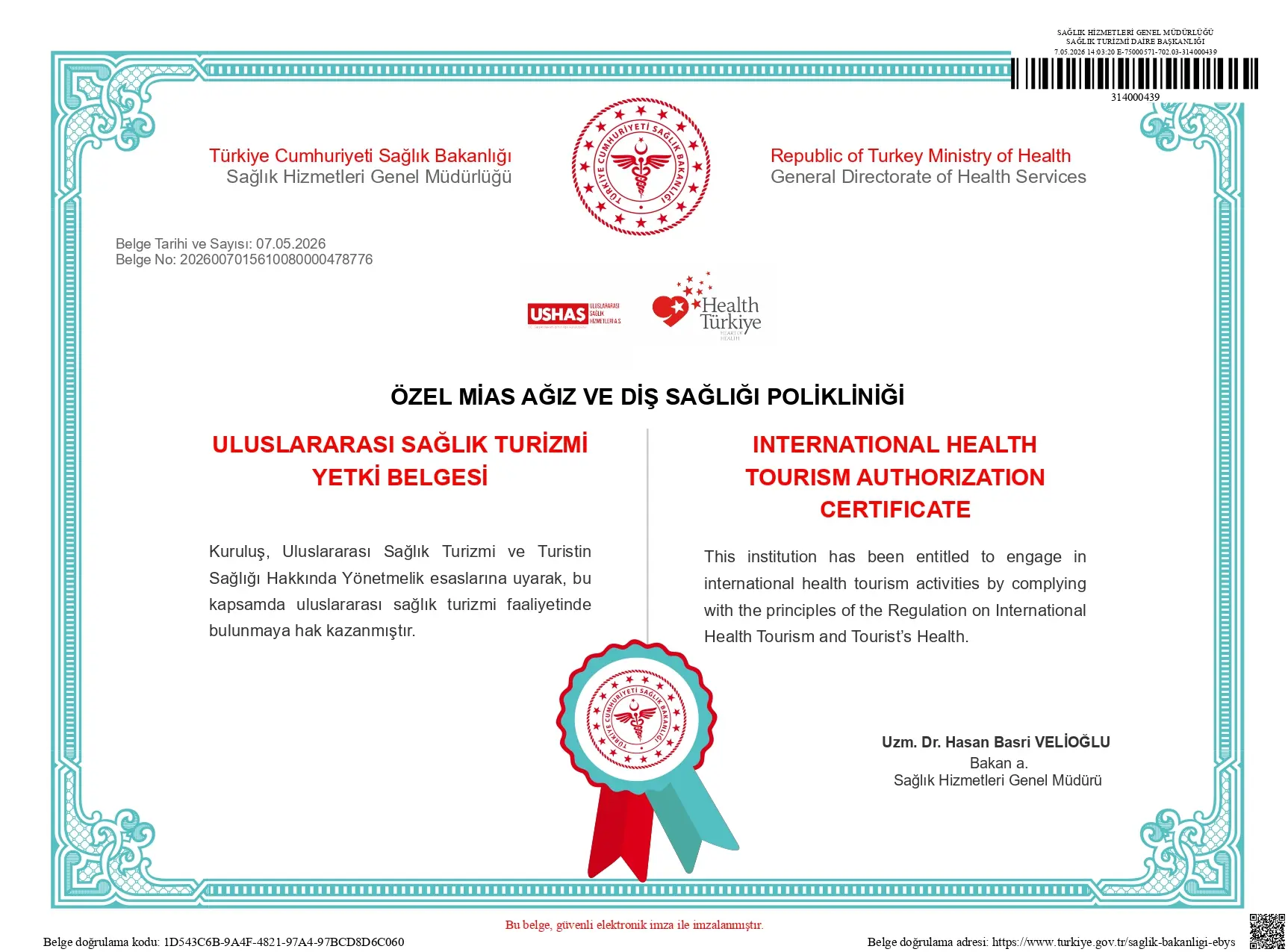
- • Official Health Tourism Authorization Certificate from the Turkish Ministry of Health.
6. Emergency Action Plan for Patients Experiencing Complications
If you are back home in the UK, Ireland, or Europe and experiencing pain, swelling, or aesthetic failure from previous overseas dental work, take the following steps:
1. Acute Swelling or Fever: Seek Immediate Local Care
Under professional medical ethics, NHS emergency services and EU emergency dental clinics are obligated to manage acute infection, drainage, and systemic antibiotics, even if they decline definitive restorative work.
2. Request Your Clinical Records from the Original Clinic
Under Turkish medical law, patients are legally entitled to their full clinical file, including pre- and post-op panoramic radiographs, 3D CBCT DICOM files, and material lot numbers.
3. Request a Direct Second Opinion from MIAS Dental Clinic
Send your existing radiographs and photos directly to Dr. Doğuş Özyürek and our specialist surgical team via WhatsApp. We evaluate your case within 24 hours at zero cost, outlining realistic biological salvage pathways.
7. Frequently Asked Questions
Why do UK and Irish dentists refuse to touch Turkey teeth?
Under General Dental Council (GDC) regulations, when a UK dentist modifies or replaces a restoration, they inherit legal liability for the entire tooth. If they do not know what brand of implant was used or how deeply the tooth was prepped, treating it poses severe regulatory and insurance risks. MIAS Dental Clinic provides all international patients with a comprehensive English clinical report and material certificates to facilitate smooth collaboration with UK practitioners.
Can over-prepped "shark teeth" be saved without extraction?
Yes. If the underlying root canal is healthy and adequate periodontal bone remains, teeth can be salvaged using microscopic endodontic retreatment, fiber post-and-core reinforcement, and biologically respectful E-max or zirconia restorations. Extraction is only recommended when root fractures or untreatable bone loss are confirmed on 3D CBCT scans.
How long does dental revision treatment take in Antalya?
Aesthetic crown revisions and bite corrections typically require 5 to 7 days in Antalya. In complex cases requiring bone grafting, sinus lifting, or implant placement, treatment is structured over two staged visits to respect biological healing times.