The Ultimate Checklist for Choosing a Dentist in Turkey: Prices, Materials, and Hidden Costs
For international patients, researching dental clinics in Turkey can quickly become overwhelming. The sheer volume of advertisements, Instagram transformations, and varying price quotes can lead to "decision paralysis." Patients are often left wondering: How do I compare two quotes that seem completely different? Why does one clinic charge twice as much for the same Zirconium crowns?
Choosing a clinic based solely on the lowest price or a glossy package deal is a recipe for medical complications. A successful dental treatment abroad requires a systematic evaluation of clinical protocols, material specifications, and the exact terms of guarantees.
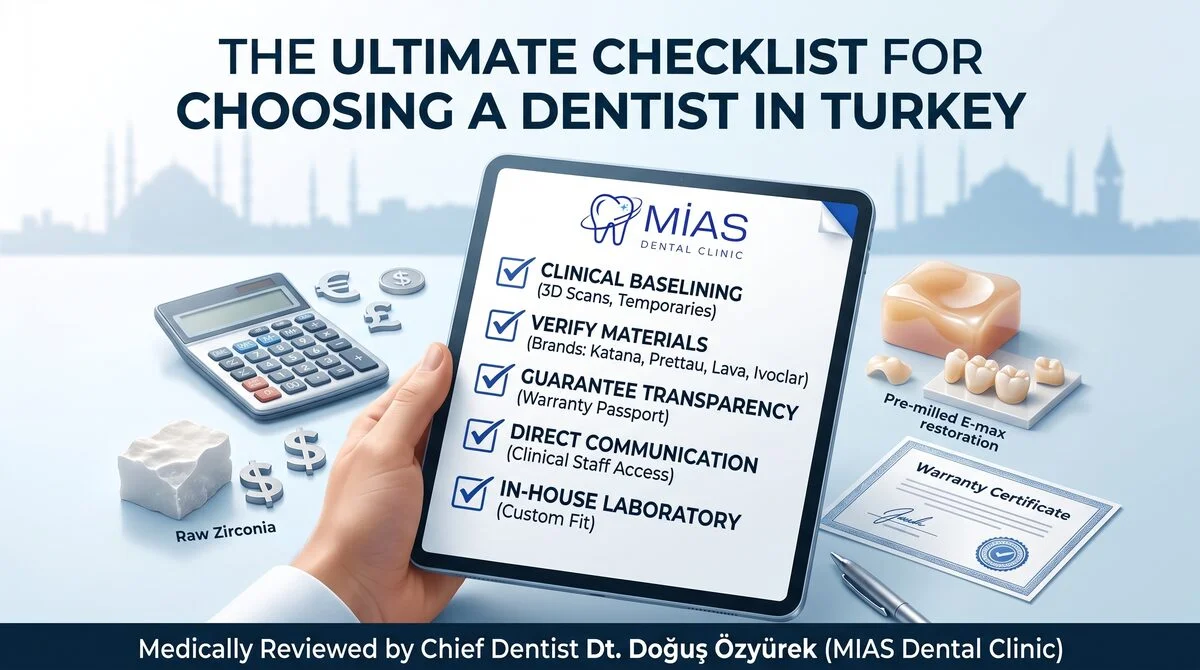
This clinical checklist, medically reviewed by Chief Dentist Dt. Doğuş Özyürek, provides patients with a step-by-step framework to evaluate dental clinics in Turkey, identify hidden costs, and make a safe, informed choice.
1. Comparing Quotes: Comparing Apples to Apples
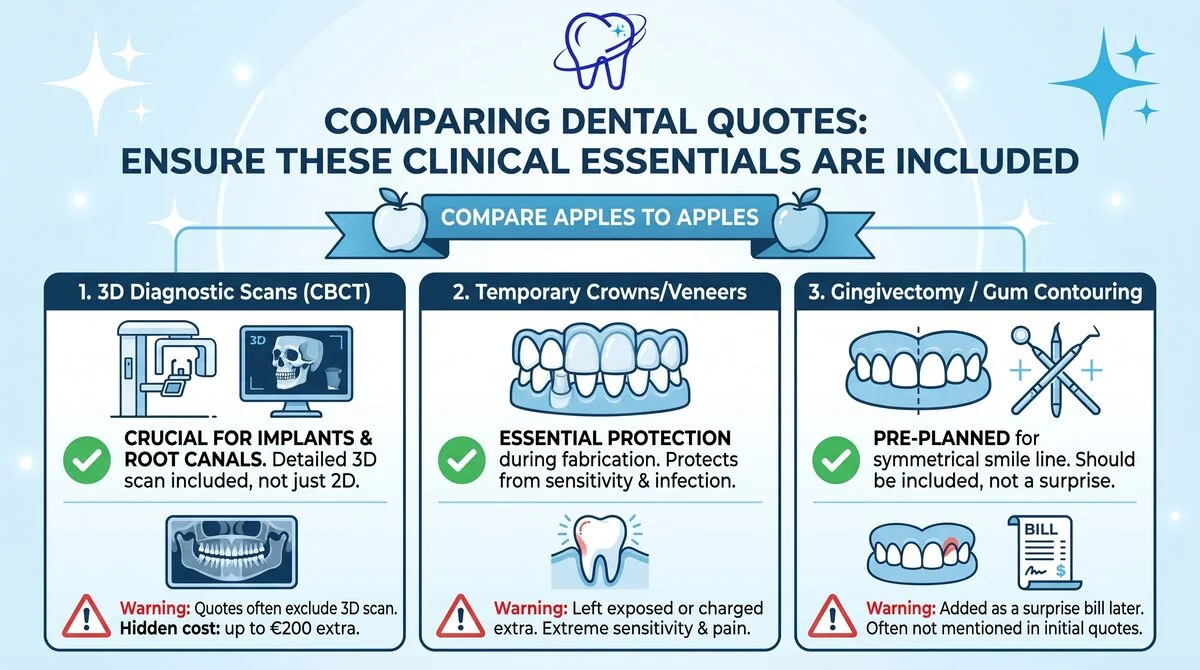
Many patients receive multiple WhatsApp quotes and try to compare them side-by-side. However, low-cost clinics often exclude essential clinical phases to make their initial quotes look cheaper, only to charge you for them once you arrive.
Clinical Baseline Checklist
Ensure your quote explicitly details the inclusion of these diagnostic and therapeutic requirements:
- 3D Diagnostic Scans (CBCT): Crucial for implants and root canal evaluations. Many clinics only include a standard 2D panoramic X-ray and charge up to €200 extra for a 3D scan on-site.
- Temporary Crowns/Veneers: If a clinic prepares (shaves) your teeth for crowns, they must protect them with temporaries while the laboratory manufactures your permanent teeth. Leaving teeth exposed causes extreme sensitivity and bacterial infection. Ensure temporaries are included at zero extra cost.
- Gingivectomy / Gum Contouring: If you need gum alignment to achieve a symmetrical smile line, this should be pre-planned and included, rather than added as a surprise bill.
2. Verifying Material Brands: Zirconium and E-max Integrity
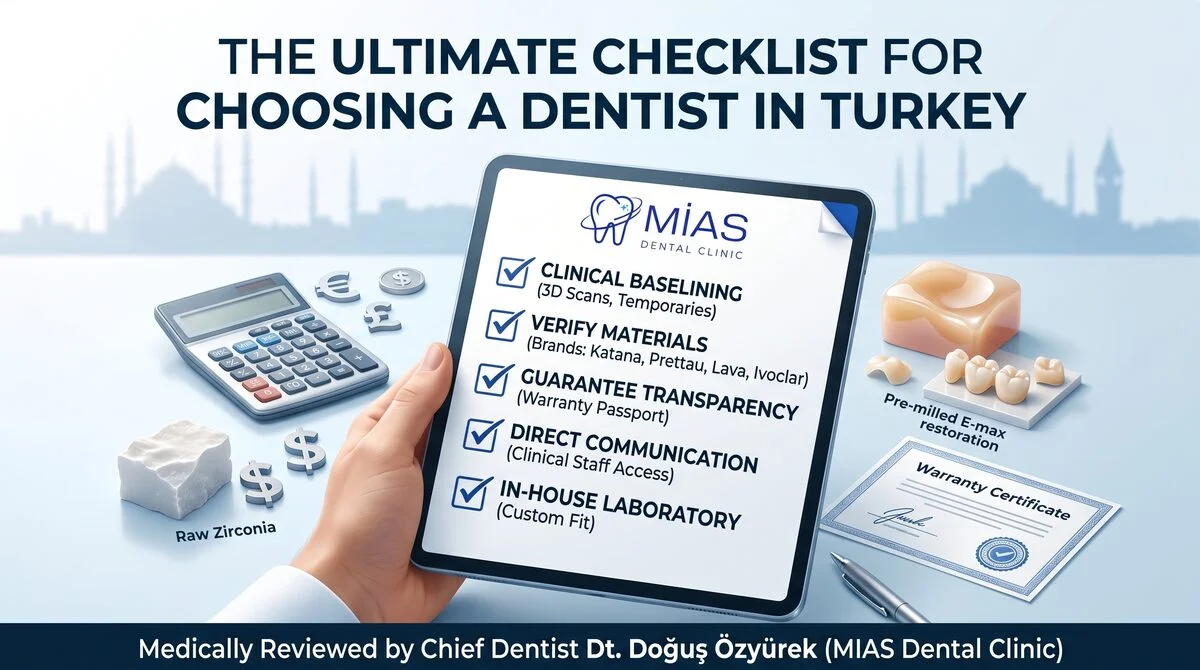
In dentistry, the brand of the material dictates its durability, biocompatibility, and aesthetic realism. Cheap "all-inclusive" packages often use low-grade zirconia blocks sourced from generic manufacturers, which are more prone to chipping, cracking, and causing gum irritation.
Material Identification Rules
Always ask the clinic to specify the exact brand they use, and verify it against these recognized industry leaders:
- Zirconium Brands: Premium manufacturers include Katana (Kuraray Noritake, Japan), Prettau (Zirkonzahn, Italy), and Lava (3M, USA). If a clinic simply says "Monolithic Zirconia" without a brand, ask for the manufacturer.
- E-max Brands: True E-max is made exclusively of lithium disilicate glass-ceramic by Ivoclar Vivadent (Liechtenstein). Be wary of clinics using cheaper composite resins or generic feldspathic ceramics while labeling them as "E-max."
- Authentication Cards: Legitimate clinics provide an official warranty passport containing the exact batch number, block manufacturer, and lab technician signature.
3. The Warranty Trap: What is Actually Covered?
Clinics often advertise "Lifetime Guarantees" or "10-Year Warranties" to reassure anxious international patients. But in the medical world, a warranty is only as good as its fine print. If a crown breaks or an implant fails after you return home, who pays for the corrective work?
Marketing Warranty Traps
These conditions often make it impossible to claim the warranty.
- Travel Exclusion: The clinic covers the cost of the replacement tooth, but you must pay for your flights, hotel, and local transfers to return to Turkey.
- Local Partner Gaps: If you experience emergency pain, the clinic has no partner dentists in your home country, meaning you must pay out-of-pocket for local emergency care.
Transparent Warranty Protocols
What a clinically honest warranty contract should look like.
- Comprehensive Coverage: The warranty contract details specific coverage for laboratory structural failures and clinical errors for a set number of years.
- Clear Responsibilities: The clinic outlines what happens if a patient cannot travel back to Turkey immediately, helping patients coordinate local diagnostic dental reports first.
4. Communication Transparency: Direct Access to Medical Staff
The communication flow before you book your trip is a preview of the care you will receive when you arrive. If you find yourself chatting with different anonymous sales agents who only answer clinical questions using copy-pasted marketing material, this is a major warning sign.
Professional clinics assign you a dedicated clinical coordinator who acts as a direct bridge to the dentist. They should be able to explain the anatomical rationale behind your treatment plan (e.g., why a sinus lift is required before placing an implant) and answer specific clinical questions directly after consulting the surgeon.
5. Clinical Infrastructure & In-House Laboratory vs. Outsourced Labs
The quality of your crowns or veneers depends heavily on the laboratory technician who designs and glazes them. Many dental practices in Turkey outsource their lab work to large commercial labs that handle hundreds of cases a day. This leads to generic, cookie-cutter "Turkey Teeth" designs that look artificial and fit poorly.
Clinics with in-house CAD/CAM dental laboratories allow the chief dentist and lab ceramist to evaluate your face shape, skin tone, and bite alignment directly in the clinic. If adjustments are needed during the try-in phase, they can be made immediately on-site, ensuring optimal fit and natural aesthetics.
Our Clinical Infrastructure Protocol
At MIAS Dental Clinic, we utilize advanced in-house diagnostic and laboratory workflows:
- In-House Custom Ceramists: Our on-site ceramists work directly with the patient in the dental chair to match tooth shade, texture, and characterization.
- Pre-Planned Custom Iterations: Every crown is custom milled using high-grade German CAD/CAM equipment, ensuring micrometer-perfect margins that prevent decay under the crown.
Frequently Asked Questions (FAQ)
How can I confirm if a clinic uses authentic Zirconium blocks?
Upon request, the clinic must show you the raw zirconia disk before milling, or provide the manufacturer's warranty card with a unique serial number after the restoration is complete. Authenticated brands like Katana or Lava always come with printable verification codes.
What happens if my dental implant fails after I return home?
If an implant fails to integrate with the bone (a rare complication that occurs in less than 2% of cases), a transparent clinic will replace the implant free of charge. However, you should review the warranty to see if they assist with travel expenses or require you to coordinate the removal with a local dentist first.
Should I choose a clinic with its own in-house lab?
Yes, choosing a clinic with an in-house laboratory is highly recommended. It significantly reduces the time needed for adjustments, allows the technician to match the crown color directly to your natural teeth under clinical lighting, and ensures higher quality control compared to outsourced labs.
Compare with Absolute Medical Transparency
At MIAS Dental Clinic, we provide detailed, all-inclusive quotations with no hidden diagnostic fees. Send us your X-rays for an honest, surgeon-reviewed medical consultation.